
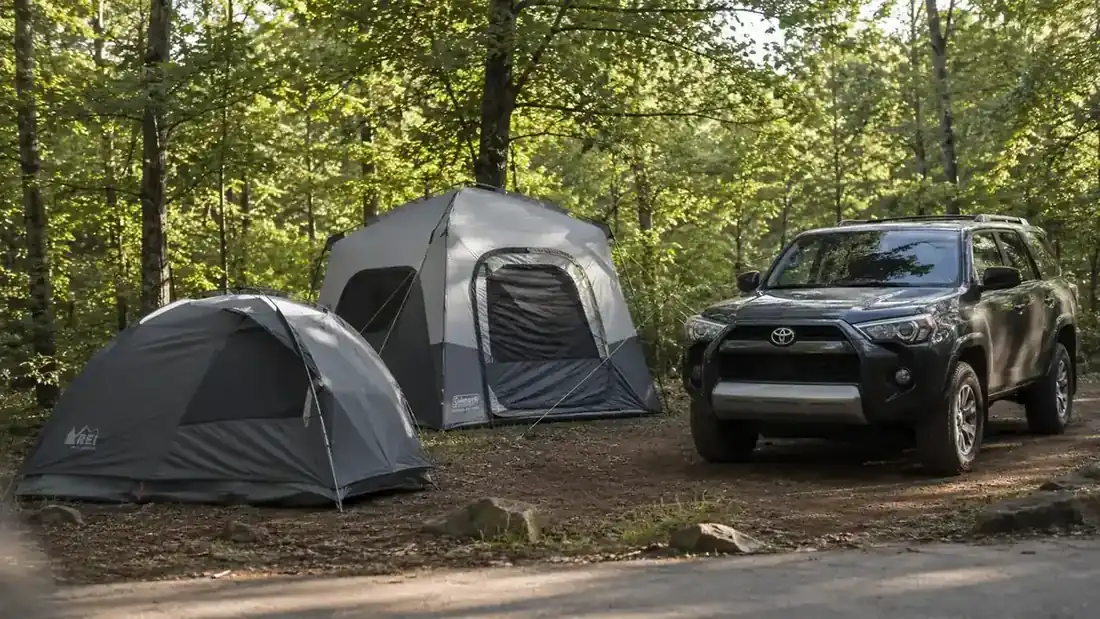
When my brother Kyle brought his family out to Robbers Cave last spring, he showed up with a CORE 9 Person Instant Cabin Tent strapped to his roof rack, and I had the Coleman Skydome we'd been running all season. We ended up pitching both tents about twenty feet apart at the same site, which turned into the most honest side by side comparison I could've asked for. Two different tent designs, same weekend, same weather, same tired kids waiting to eat dinner.
Short answer up front: if you camp the way our family does, weekend trips inside about a four hour drive from northeast Oklahoma, one SUV, two kids who want to be fed and asleep fast, the Coleman Skydome wins on setup speed, packed size, and price. The CORE instant cabin wins on headroom and floor space if you've got the cargo room to spare and don't mind a tent that needs two people to pitch it. Here's how they actually stacked up.
| Coleman Skydome (6-Person) | CORE 9 Person Instant Cabin Tent | |
|---|---|---|
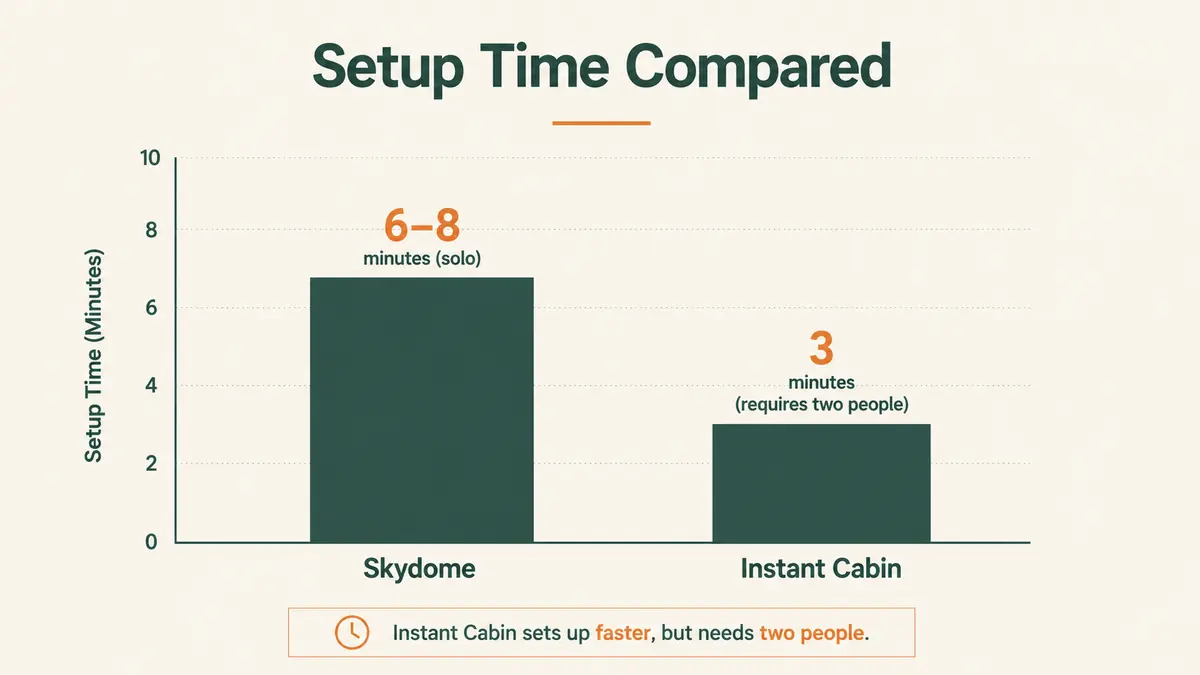
| Setup Time | About 6-8 minutes solo, closer to 6 with a second set of hands | About 3 minutes once unfolded, but really needs two people to lift the frame |
| Packed Size | Duffel bag small enough to fit behind the 4Runner's back seat | Larger duffel that took up most of a cargo shelf |
| Price | Runs roughly half the cost of a comparable instant cabin | Costs close to double the Skydome for the bigger 9-person size |
| Peak Height | About 6 feet 2 inches at the center hub | About 6 feet 8 inches with near-vertical cabin walls |
| Floor Space | 83 x 60 inches, comfortable for four sleepers plus gear | 9 x 9 feet with a hanging room divider |
| Rainfly Coverage | Full rainfly over a welded tub floor, Coleman's WeatherTec system | Partial rainfly over the roof seams, corners more exposed to wind-driven rain |
| Packed Weight | About 17 pounds | About 33 pounds |
| Doors | 1 large D-style door | 2 doors, one at each end |
How I Tested Both Tents
Nolan is eleven now and Ivy just turned eight, so we're past the toddler-nap-schedule chaos, but we're still very much in the phase where everybody wants to help set up camp and everybody ends up underfoot. I timed myself pitching the Coleman Skydome solo, phone stopwatch running, the way I've done it on a dozen other trips this season. Then Kyle and I unfolded the CORE instant cabin together, since that one genuinely wants two sets of hands once the frame is out of the bag.
Both tents went up at the same Robbers Cave site on a Friday evening, then again the next morning as a dry run so I could double check timing without the pressure of losing daylight. I wanted variables that actually matter to a family like ours, not just numbers off a spec sheet. Time to first stake in the ground, time until the kids could climb inside and claim their spot, and how each tent held up when a line of storms rolled through overnight.
We also swapped kids for one night, just to see how each tent lived with a family sleeping in it rather than just standing empty for photos. Nolan and Ivy bunked in the CORE with Kyle's crew one night, and his older two slept in the Skydome with us the next, mostly so I could hear honest kid opinions instead of just my own adult read on floor space and noise from the rainfly in the wind.
Where the Coleman Skydome Wins
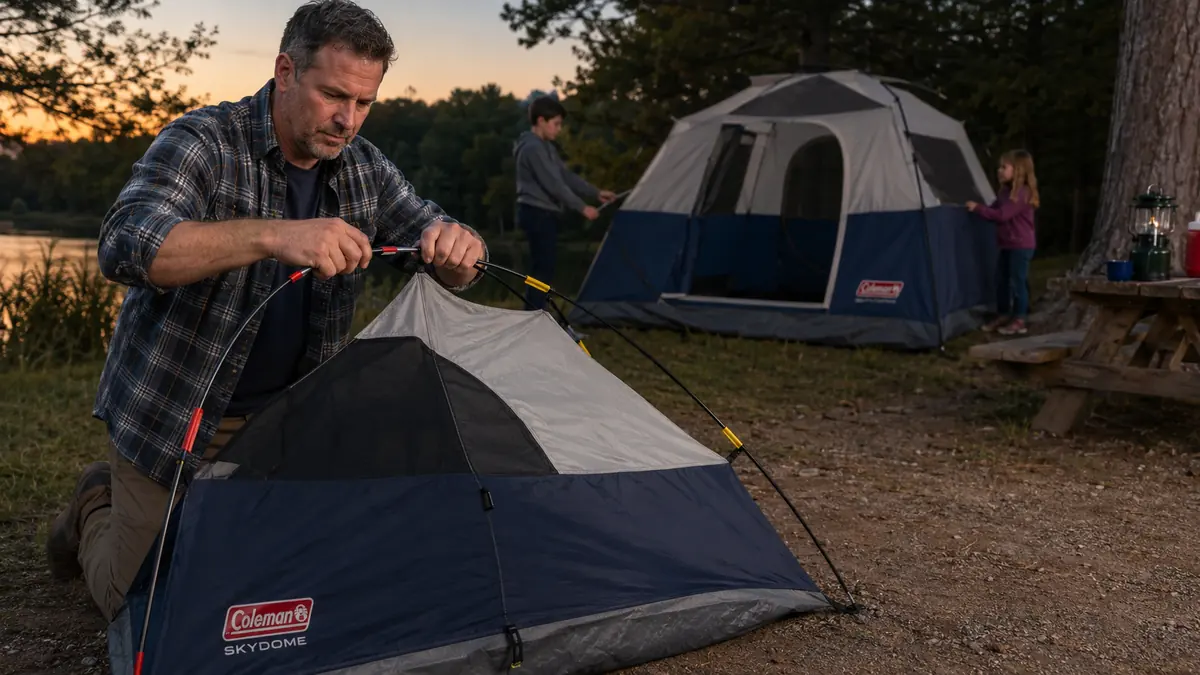
Setup speed is the whole ballgame for us on a Friday night arrival, and it's where the Coleman Skydome pulled ahead even against a tent that advertises itself as instant. The poles are color-coded to their sleeves, so I wasn't guessing which arc went where as the light faded. Once the hub snapped together and I staked the four corners, the rainfly went on in under two minutes. Total time, just under seven minutes solo, which lined up with what I've clocked on other trips this season.
Packed down, the Skydome's duffel is small enough to wedge behind the 4Runner's back seat instead of eating into the cargo area where the cooler and stove live. That matters more than people think when you're loading a Coleman tent, a propane stove, sleeping bags, and a rolling cooler into one SUV for a weekend trip. The lighter pack weight also means I'm not the only one who can carry it from the truck to the site. Nolan hauls it half the time now, and he couldn't budge the CORE's heavier bag on his own.
Price is the other place the Coleman name earns its keep. The Skydome runs roughly half of what Kyle paid for his instant cabin, and for a family doing weekend trips inside a four hour radius rather than week-long expedition style basecamp stays, that difference is real money left over for a better sleeping pad or a second tent for guests.
Where the CORE Instant Cabin Tent Wins
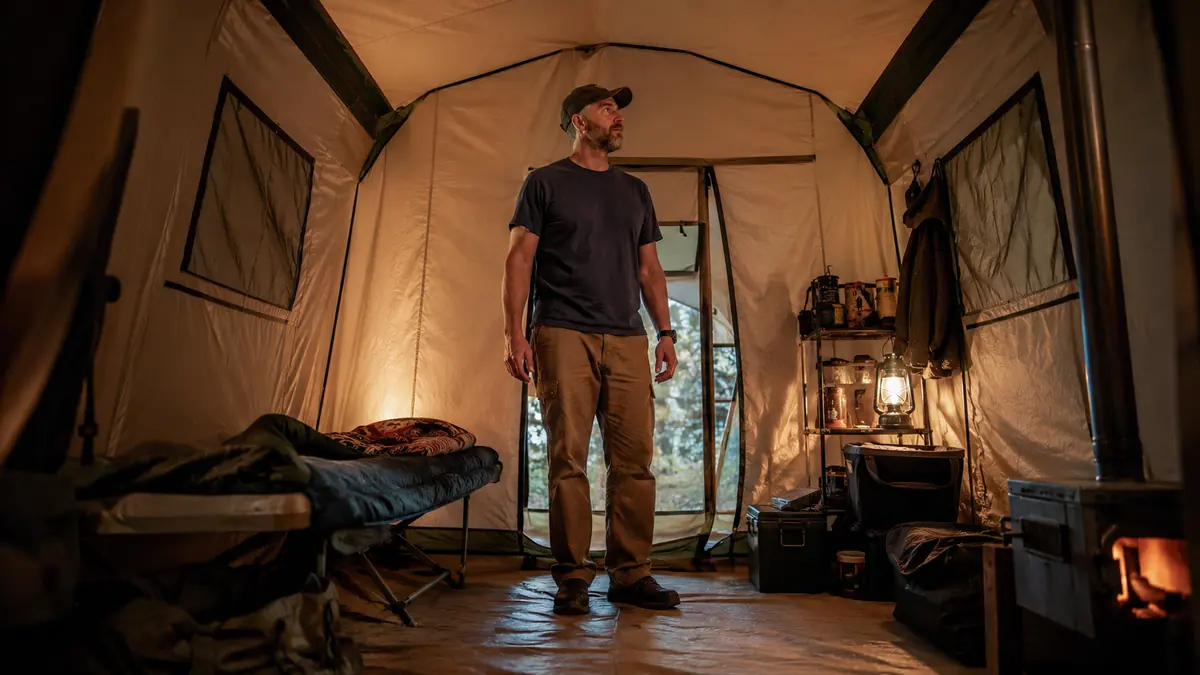
I'll give credit where it's due. The instant cabin's near-vertical walls mean an adult can stand up straight almost anywhere inside it, not just under the center peak like the Skydome. I'm 5'11 and I could walk from one end to the other without ducking. If you've got four or five kids, or you're basecamping for a full week instead of two nights, that extra headroom and floor space starts to matter more than shaving off a couple minutes of setup time.
The hanging room divider on the 9-person cabin also gave Kyle's family a real second room, something the Skydome's 6-person size doesn't offer. It would have let his older two kids have their own sleeping area separate from him and his wife, which is a genuine advantage for a bigger family or one with older, more independent kids who want a little privacy at a campsite.
The tradeoff is real, though. The CORE tent took up nearly a whole cargo shelf in Kyle's SUV, and setup genuinely needs two people to lift the pre-attached frame without bending a pole. When he tried pitching it solo the next morning while I helped Dana pack up our site, he gave up after a few minutes and waited for me to come lend a hand.
Doors, Ventilation, and Everyday Livability
This is the part nobody thinks about until 2 AM. The Skydome has one large D-style door, which is fine for our family since Dana and I sleep near it and can handle the middle-of-the-night bathroom runs without climbing over the kids. The CORE has two doors, one on each end, which meant Kyle's older two could come and go from their side of the room divider without stepping through the rest of the tent. If you've got kids at different bedtimes or different bathroom schedules, that second door on the instant cabin is a real convenience.
Ventilation is where the two tents felt closest, honestly. Both use mesh panels along the upper walls, and on a still, muggy Oklahoma night neither one moves a lot of air without help from a breeze or a cracked rainfly vent. I did notice slightly better airflow through the Skydome's ground vents once I remembered to open them, something I mention in our full Skydome review too, since it's an easy thing to forget after a long drive when you just want the tent up and dinner started.
One thing neither spec sheet tells you is how loud a tent sounds during a storm from the inside. The Skydome's tighter rainfly and lower profile muffled the rain better than I expected, more of a steady patter than a roar, and Ivy actually slept through the worst of it. Kyle said the CORE's taller walls picked up more of the wind noise, and his youngest woke up twice asking if the tent was going to blow away. It didn't, but that's worth knowing if you've got a light sleeper along for the trip.
What Fits in the 4Runner
Cargo space is a bigger deal than most tent reviews give it credit for. With the Coleman Skydome's duffel wedged behind the back seat, we still had the full cargo area for the cooler, the Coleman Triton stove, camp chairs, and Nolan and Ivy's overnight bags. Nothing had to ride on laps or get strapped to a roof rack.
Kyle's setup told a different story. The CORE tent's bag took up most of one cargo shelf on its own, which meant his cooler ended up wedged sideways and his kids' bags rode in the third row footwell instead of the cargo area. It's not a dealbreaker if you're driving a bigger SUV or a truck with a bed, but in anything the size of our 4Runner, the Skydome's smaller footprint made packing for the whole weekend noticeably easier.
Breaking camp the next morning told the same story in reverse. I had the Skydome dried off in the sun, rolled, and back in its duffel in about ten minutes, mostly because the smaller footprint dries out faster. Kyle's instant cabin took closer to twenty minutes to break down and repack, partly its size and partly because folding the pre-attached frame back into its bag takes a technique neither of us had fully figured out yet.
What Actually Happened in the Rain
The real test came overnight when a line of storms rolled through Robbers Cave with sustained wind and probably close to an inch of rain in under an hour. The Skydome's full rainfly and welded floor kept our tent bone dry, though I had to walk the guy lines the next morning since a couple had loosened in the wind. Kyle's instant cabin fared decent overall, but its rainfly only covers the roof seams, and he found a damp patch near one corner where wind-driven rain got up under the shorter fly and along a wall seam.
Neither tent flooded, and to be fair, that damp patch in the CORE tent was small enough that a towel handled it before the kids even woke up. But if I'm picking one tent to trust on a night when the forecast looks iffy, and most of our trips inside that four hour radius from home come with at least a chance of a pop-up storm, the Coleman Skydome's coverage gives me one less thing to worry about at 1am.
Wind was the other variable that night. The CORE's taller, boxier profile caught more of the gusts, and Kyle said he could feel the walls flexing more than he liked around 2 AM. The Skydome's lower dome shape sheds wind better as long as you stake every loop and use the guy lines, which I always do now after one embarrassing trip earlier this season where I skipped them and paid for it.
Faster to pitch, cheaper to buy, and it kept us dry when it mattered
For weekend trips where setup speed actually decides whether dinner happens on time, the Coleman Skydome is the tent we reach for first. Check today's price and current stock on Amazon.
Amazon Check Today's Price on Amazon →Who Should Buy Which
If you camp like we do, weekend trips, one SUV, two kids who want to be inside eating dinner within twenty minutes of pulling in, the Coleman Skydome is the easier tent to live with. It's faster up, lighter to carry, cheaper to buy, and it kept us dry when the storm hit. For our trips, it's the one that goes back in the 4Runner every single time.
If you're basecamping for four or five nights at a stretch, camping with a bigger family, or you genuinely need to stand up straight anywhere inside the tent, an instant cabin tent like Kyle's CORE might be worth the bigger price tag, the extra cargo space it demands, and the extra set of hands it takes to pitch it. Just know going in that it's a two-person job, and it packs bigger than you might expect from something called instant.
Still the tent we grab first before every trip
After putting it up against a bigger, pricier instant cabin at the same campsite, the Coleman Skydome still won on the things that matter most to our family. See today's price on Amazon.
Amazon Check Today's Price on Amazon →