
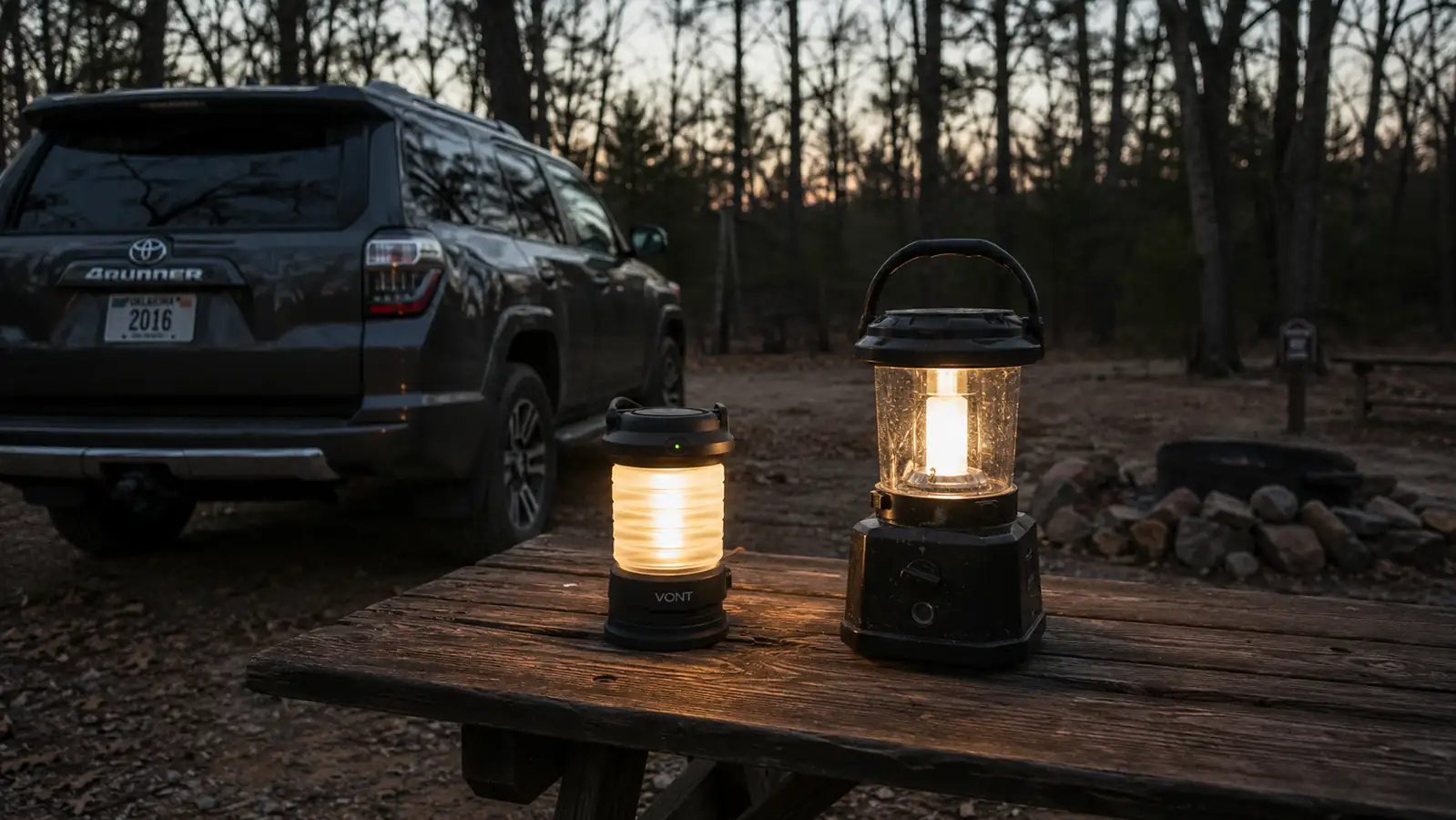
Kyle showed up to our Robbers Cave weekend last October still running the same Coleman CPX 6 battery lantern he's had since before his kids could walk, and I had my two-pack of EZORKAS rechargeable lanterns clipped to the awning of our tent within about ninety seconds of parking. Neither of us said much about it that first night. Then his lantern started fading around 9:30 while Nolan and Ivy were still building a card tower on the picnic table, and the conversation got a lot more interesting.
Short answer up front: for weekend trips inside about a four hour drive from northeast Oklahoma, the EZORKAS rechargeable lantern wins on cost per trip, weight, and not getting caught with a dead light halfway through the evening, as long as you remember to charge it before you leave the driveway. The Coleman CPX 6 wins on raw runtime per set of batteries and on not needing any power source at all, which matters if you're the kind of camper who forgets to plug things in. Here's how they actually held up over the same three nights.
This isn't a lab test with a light meter and a lux chart, though I'll get into the numbers below. It's what happened when two dads with two very different lanterns spent three nights at the same campsite, watched their kids play cards by the light of each one, and paid attention to which lantern made the evening easier and which one made us think twice.
| EZORKAS Rechargeable Lantern | Coleman CPX 6 (Battery) | |
|---|---|---|
| Power Source | Built-in rechargeable battery, USB-C charging, also takes 3 AA batteries as a backup | 6 D-cell batteries, no charging port, batteries only |
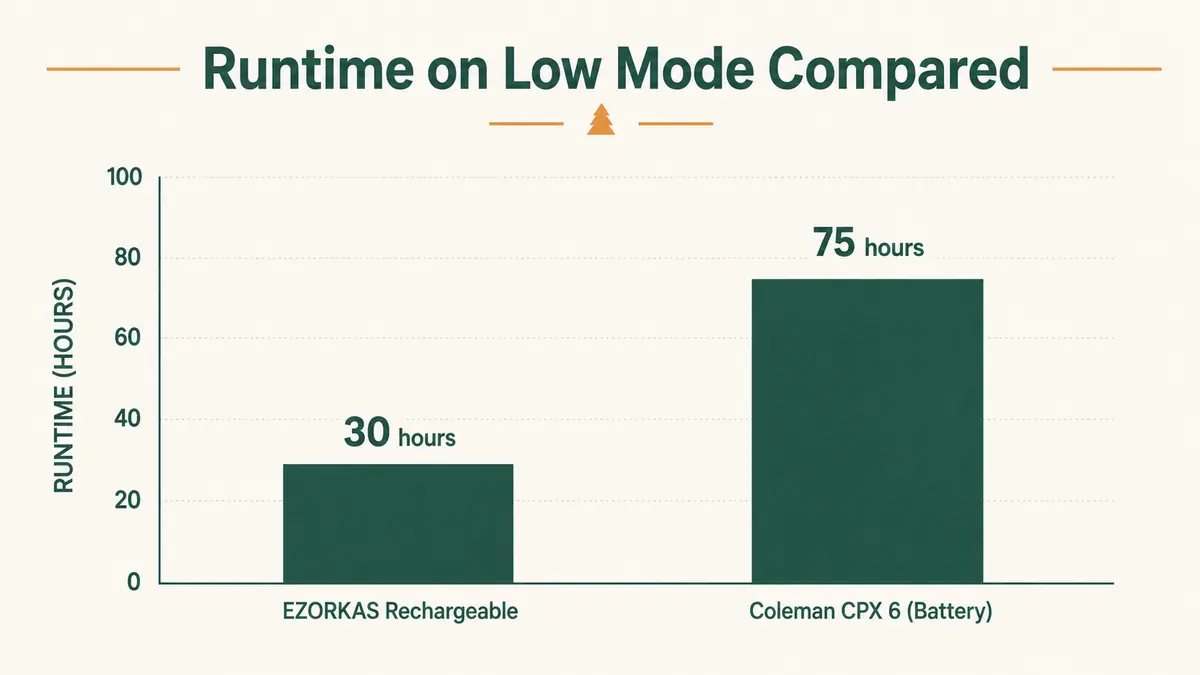
| Runtime on Low | About 30 hours per full charge on the lowest of four brightness settings | About 75 hours per fresh set of 6 D batteries on low |
| Runtime on High | About 8 to 10 hours on high before it needs a recharge | About 24 hours on high before the batteries need replacing |
| Cost Per Weekend | Effectively free after the initial purchase, just needs a wall outlet or power bank | A fresh 8-pack of D batteries runs close to $12, and you'll want a spare set for a 3-night trip |
| Weight | About 10 ounces each, comes as a 2-pack | About 2.4 pounds loaded with 6 D batteries |
| Recharge or Restock Time | Roughly 4 hours to full charge off a wall outlet or power bank before the trip | Instant, as long as you're carrying spare D batteries with you |
| Included Count | 2 lanterns in one package, one for the tent and one for the picnic table | 1 lantern per unit, batteries sold separately |
| Extra Features | Detachable flashlight mode, magnetic base sticks to the 4Runner's tailgate, collapsible hurricane-style shade | Fixed globe shade, built-in handle, no flashlight mode or magnetic base |
| Best For | Weekend car camping, one SUV, remembering to charge gear the night before | Longer trips off-grid, backup lighting, campers who don't want to think about charging anything |
How I Tested Both Lanterns
I charged both EZORKAS lanterns to full the night before we left, the same way I do before every trip, off a power bank plugged into the 4Runner's console. Kyle loaded a fresh set of 6 D batteries into the Coleman CPX 6 that morning. We set both lanterns up the same way each night, one hanging from the awning ridge line and one sitting on the picnic table, both running on their medium setting from dusk until whoever went to bed last turned them off.
Nolan and Ivy were the real test audience again, mostly because they're the ones who notice first when a lantern starts dimming during a card game or a bedtime story. That's a more honest gauge than a spec sheet, since a lantern that looks fine in a bright showroom photo can still leave a kid squinting at a deck of cards by hour three if the runtime claim doesn't hold up on an actual cool October night.
We ran the same setup for all three nights of the Robbers Cave trip, then I repeated the medium-setting test again at home the following week just to rule out one battery pack being unusually weak. Same result both times. The EZORKAS lantern held steady brightness the whole evening and dropped off quickly once the low-battery warning kicked in, while the Coleman CPX 6 dimmed more gradually as its D batteries wore down, which is its own kind of useful warning if you're paying attention.
The nights at Robbers Cave dropped into the low 40s, which is about as cold as we usually camp in northeast Oklahoma outside of a rare winter trip. Cold weather isn't kind to rechargeable batteries, and I half expected the EZORKAS lanterns to lose some runtime because of it. They held up better than I braced for, maybe an hour or two shorter than the same lanterns run in warmer September weather, but nothing dramatic. Kyle's D batteries didn't seem to notice the temperature at all, which tracks with what I've read about alkaline cells handling cold better than small rechargeable lithium packs.
Brightness and Beam Quality
On paper the two lanterns aren't far apart, the EZORKAS puts out around 300 lumens on its highest setting and the Coleman CPX 6 is rated close to 390. In practice, side by side on the picnic table, they looked more even than the numbers suggest. The EZORKAS throws a wider, more even wash of light through its collapsible hurricane-style shade, which made the whole table glow instead of leaving a bright hot spot in the middle with dim edges. The Coleman's fixed globe shade puts more of that rated brightness straight down and less out to the sides.
Where the difference actually showed up was color. The EZORKAS runs a cooler, whiter light that's easier on the eyes for reading or card games, while the Coleman CPX 6 leans a touch warmer and yellower, which Dana actually prefers for the tent since it feels less like a work light and more like something you'd want to fall asleep next to. Neither one is wrong, it's a preference call, but if you're picking a lantern for reading in a hammock versus one for ambient tent light, that color difference is worth knowing about before you buy.
Where the EZORKAS Rechargeable Wins
Cost is the first thing that separates these two once you actually track it across a season of trips. I haven't bought a single battery for the EZORKAS lanterns since we got them, just a nightly plug-in before we leave. Kyle, by his own count, has burned through close to $60 in D batteries over the same stretch of time, because a lantern that eats 6 D cells at once adds up fast if you're camping most months.
Weight is the other place the EZORKAS pulls ahead for a family running one SUV. Each lantern is about 10 ounces, and the 2-pack together weighs less than the single Coleman CPX 6 loaded with its 6 D batteries. That's not a huge deal for one lantern, but once you're packing a tent, a cooler, sleeping bags, and everything else for two kids, every pound that doesn't need to be there matters more than it sounds like it should.
The magnetic base and detachable flashlight mode on the EZORKAS lantern also earned their keep more than I expected. It sticks right to the 4Runner's tailgate when we're setting up camp in fading light, freeing up both my hands, and Ivy has claimed one as her personal flashlight for the walk to the bathhouse more than once. The Coleman CPX 6 doesn't do either of those things. It's a lantern, full stop, and a solid one, but it's not trying to be anything more.
Where the Coleman CPX 6 Wins
I'll give Kyle's lantern its due, because 75 hours on low from one set of batteries is a real number, and it beats the EZORKAS by a wide margin if you're basecamping for longer than a weekend. On night three at Robbers Cave, his Coleman was still running strong on the same batteries he'd loaded that first morning, while I'd already topped off one of my EZORKAS lanterns off a power bank the night before.
There's also something to be said for a lantern that doesn't care whether you remembered to charge it. Kyle keeps a spare 8-pack of D batteries in his camping tote year round, and as long as that tote makes it into the truck, his lantern is never going to show up dead. I've had one close call with the EZORKAS lanterns myself, a trip where I grabbed the gear bag without double-checking the charge level and got lucky that it still had about 60 percent left.
For anyone camping somewhere without easy access to an outlet or a car charger for several nights in a row, that battery independence stops being a minor convenience and starts being the actual deciding factor. The Coleman CPX 6 doesn't ask you to plan ahead the way a rechargeable lantern does, and for some campers that peace of mind is worth more than the savings on batteries.
Kyle also pointed out something I hadn't thought about until he said it out loud, which is that D batteries are about the easiest camping consumable to find on short notice. Every gas station and dollar store between our house and Robbers Cave stocks them. If his Coleman CPX 6 had actually died mid-trip, replacing it would have meant a five minute stop on the way into town. If one of my EZORKAS lanterns had died and I hadn't packed a charger or a power bank, there's no gas station fix for that. It's a smaller risk than it sounds, since I've never actually run one dead on a trip, but it's a real gap worth naming.
Kyle's lantern never needed an outlet. Mine never needed a spare set of D batteries. Neither one is wrong.
Two lanterns, one charge, no batteries to pack
For weekend trips where remembering a charger is easier than remembering a fresh 8-pack of D batteries, the EZORKAS rechargeable lantern is the one that stays in our gear bag between trips. Check today's price and current stock on Amazon.
Amazon Check Today's Price on Amazon →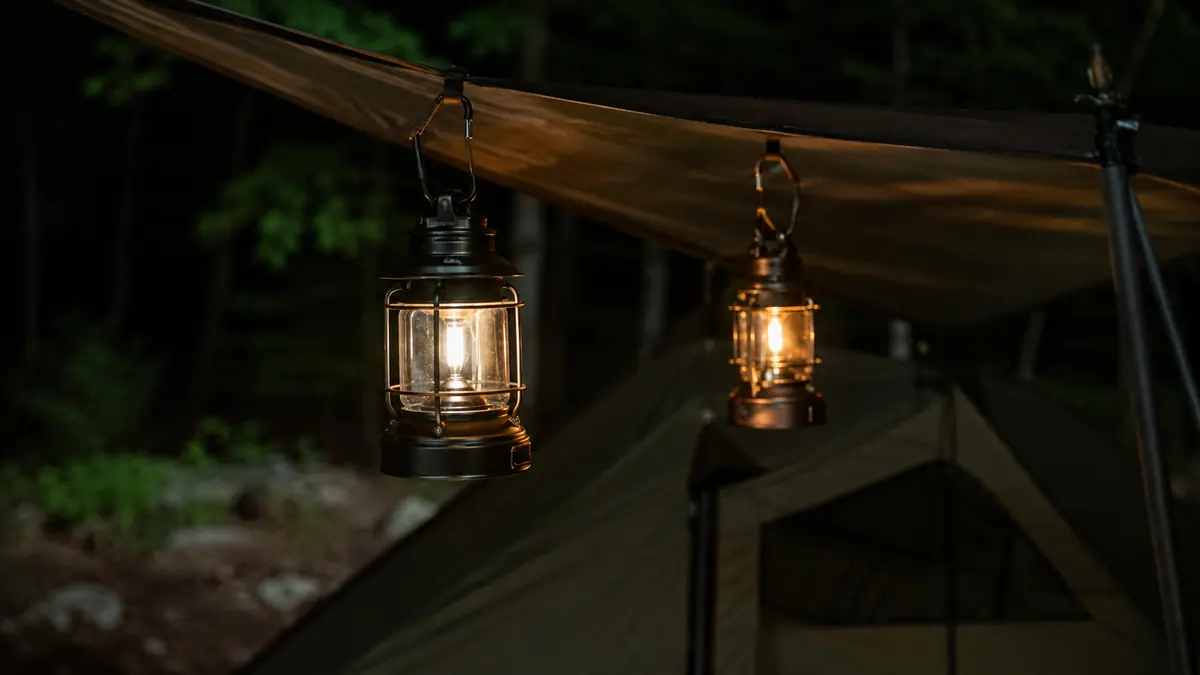
Power Logistics for a Weekend Trip
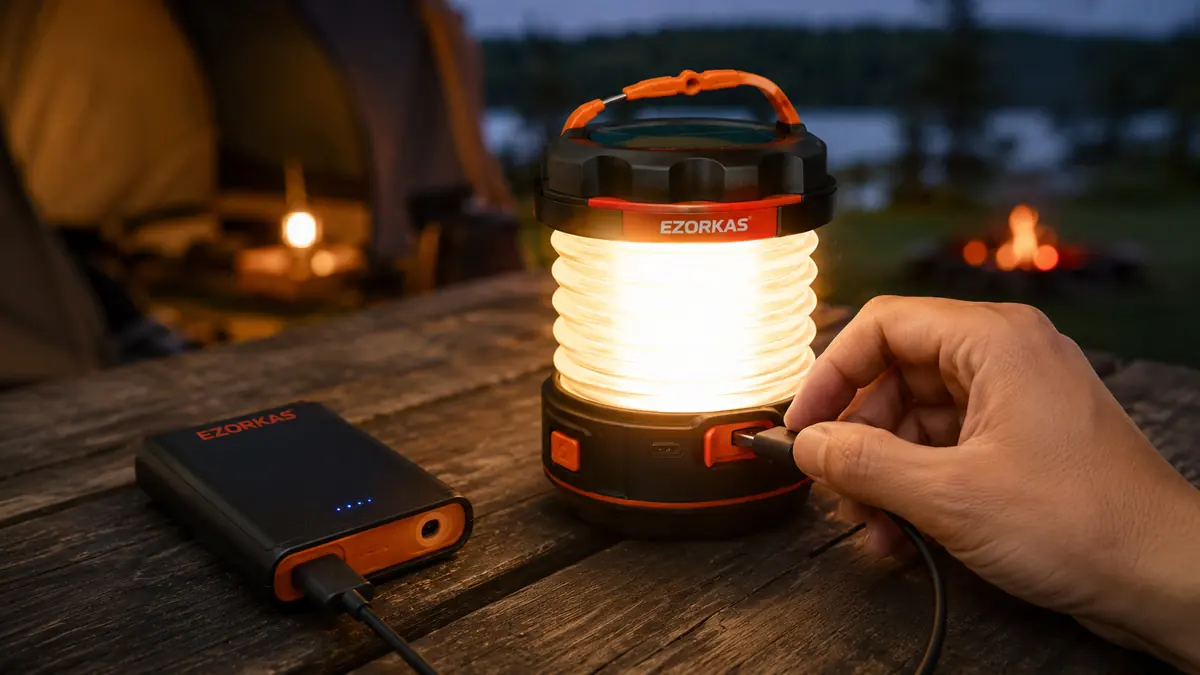
This is the part that never shows up on a spec sheet but changes how a lantern actually lives in your camping routine. The EZORKAS lanterns charge off any USB-C cable, so I top them off the same night I'm loading the cooler, plugged into the same power bank I use for phones and headlamps. It's one more thing to remember, but it folds into a routine I already have.
The Coleman CPX 6 asks for nothing ahead of time as long as the batteries are already loaded, but it does ask you to plan for battery replacement mid-trip if you're staying more than a couple of nights. Kyle keeps his spare 8-pack in the same tote as the lantern itself so he's never digging through the truck at 9pm looking for D batteries, which is a habit worth copying no matter which lantern you run.
There's a cost angle here too, and it's easy to miss if you're only comparing the sticker price of the two lanterns. The EZORKAS 2-pack costs more upfront than a single Coleman CPX 6, but Kyle's ongoing battery spend catches up within a season or two of regular weekend trips. Factor in that the EZORKAS pack gives you two lanterns to Kyle's one, and the price gap closes even faster than it looks on the shelf.
Who Should Buy Which
If you camp like we do, weekend trips within a four hour drive, one SUV, and a routine where the gear gets loaded and charged the same night, the EZORKAS rechargeable lantern is the easier one to live with. It's lighter, it costs nothing extra to keep running, and the magnetic base and flashlight mode do double duty that Kyle's lantern just can't match. For our trips, both EZORKAS lanterns stay charged and packed in the 4Runner between weekends.
If you're basecamping for several nights somewhere without easy access to power, or you just don't trust yourself to remember a charge cycle before every trip, the Coleman CPX 6's battery runtime and total independence from an outlet earn their keep. Keep a spare set of D batteries in the same bag as the lantern, and you'll never be the one squinting at a card game while the light fades.
Kyle actually asked to borrow one of my EZORKAS lanterns on our next trip out to Beavers Bend, so he could see for himself whether the charging routine was as easy as I made it sound. I'm guessing he still keeps the Coleman CPX 6 in the truck as a backup either way, and honestly that's not a bad approach for anyone who isn't sure yet. Run the rechargeable as your primary and keep an old battery lantern in the gear tote for the trip you forget to charge anything.
Still charged when the batteries would have run out
After three nights running both lanterns side by side at Robbers Cave, the EZORKAS rechargeable still won on the things that matter most for a weekend trip. See today's price on Amazon.
Amazon Check Today's Price on Amazon →